

SnapShot Press Release | FRIDA . . . A SELF PORTRAIT
/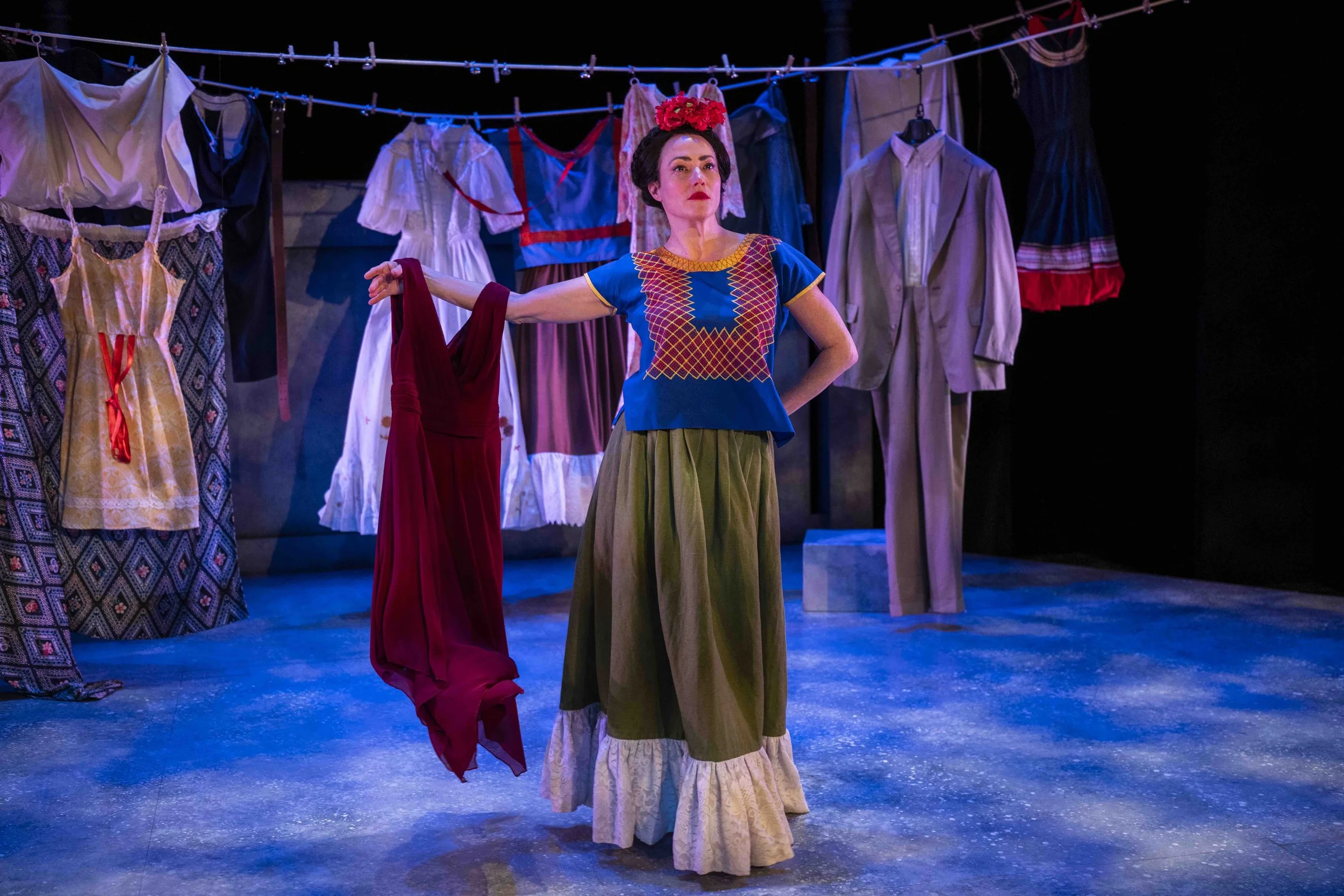
Milwaukee Repertory TheaterpresentsFrida...A Self Portraitin the Herro-Franke Studio TheaterApril 3–May 17, 2026featuring Vanessa Severo.Photo by Michael Brosilow
“Do you see Frida in Me?”
The question has layers. It requires you to see beyond what your eyes can render, it begs you to handle truths that can only be spoken by those who are or have been [whatever it is], and it demands that you have a curiosity that is borderline invasive. To see “Frida” is to know that seeing requires vulnerability, and to lay it on canvas with oil paint is messy work.
Friday’s [April 10th, 2026] Milwaukee Repertory Theater’s Frida . . . A Self Portrait, written and performed by Vanessa Servero & directed by Joanie Schultz, was a fervently emotional and enchanting interpretation of life as the great Frida Kahlo. In what could be categorized as a ‘monólogo teatral femenino’, lies the exclamation of mastery in rapid characterization, imaginative set design, and a practice of humility that asks for a confidence that, for lack of a better word, can only be described here as admirable ego.
The life of Frida Kahlo in itself is something of an exquisite corpse. From the polio effect on her body & ability to walk in early life, to the bus accident that sent a pole through her and left her with a broken spine, pelvis, ribs, a pierced abdomen in her late teens, to her stent of being bedridden with over 30 surgeries, the chronic pain, and then wrap it all up with the tumultuous love she had with Diego [I’m not putting his last name because this is not about HIM]. One fragment of her reality is enough to give up on life, but she gifted the world her truth leaving us art that has meaning, that speaks through humanity, that is not void of self.
I believe Vanessa channeled Frida, not just by dressing up like her [I’m not going to lie, I wanted more unibrow] and walking us through her story, but by adding her own truth about her own hurdles in life. Servero did not dismiss her “little hand”; instead, she confronted the difference [as Frida did hers]. She noted how we learn hard truths from the women in our lives. Her mother washing each dish individually, drying them, and then shattering them on the floor as an act of agency and defiance toward her husband [a strength Frida would surely have recognized], and so many other moments of breaking the fourth wall.
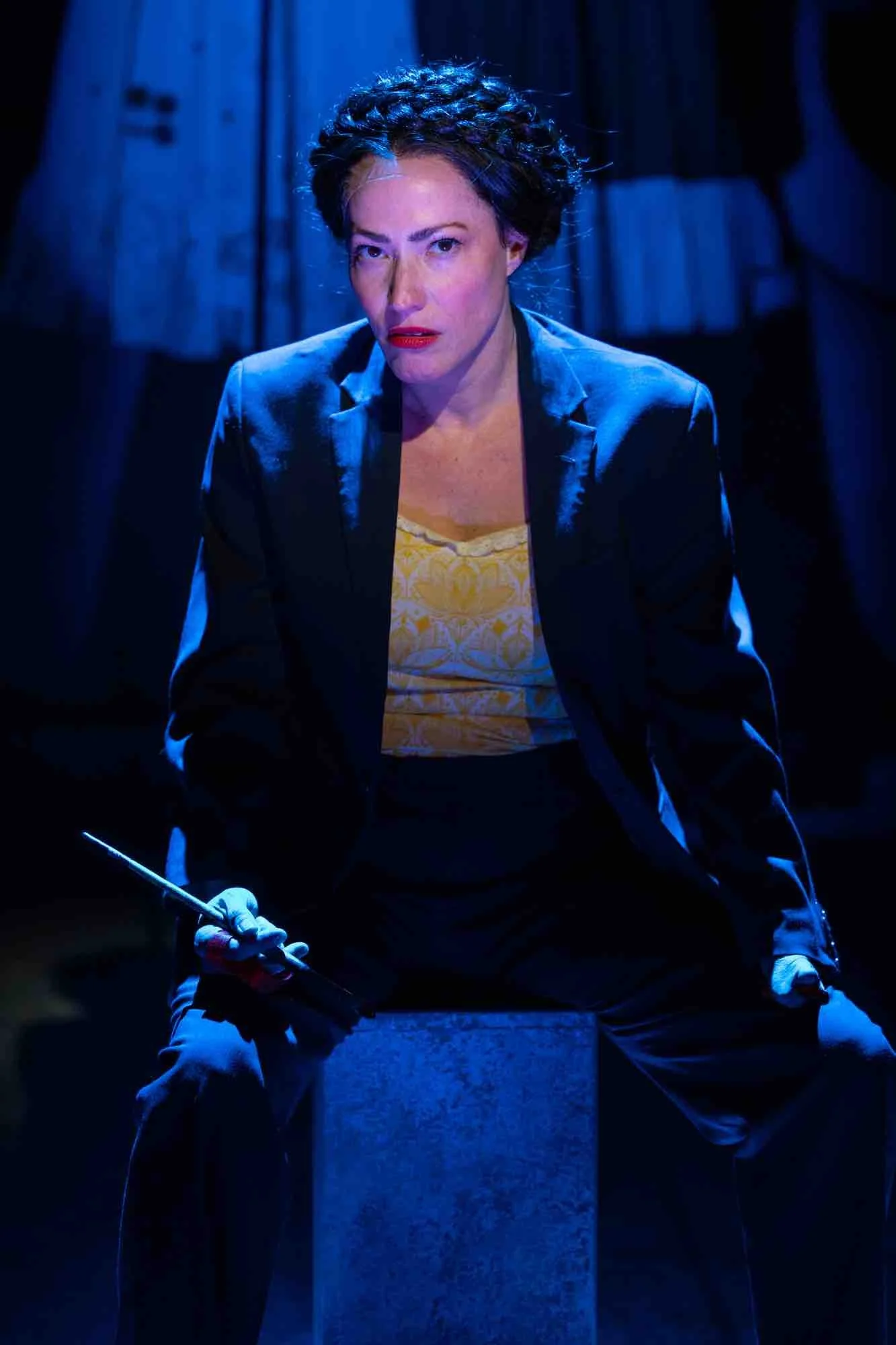
The secrets that this performance unearthed were secrets that require you to know something about something. The surface-level pretentious understanding of surrealism [or magical realism] won't suffice here. It requires you to connect sentiment to the performance, the performance to the stage, the stage to the art, and the art to Frida’s soul. I bowed my head to pray to my ancestors that art school had not forsaken me in this moment, for Servero had referenced so many of Kahol’s master pieces without ever showing one painting. Harnessed between the stage-sized bed post with headboard [Jacqueline Penrods work I presume] and a triptych of clothes lines airing out a life of dirty laundry, you find The Broken Column (1944) [as the series of belts stacked around her waist], Memory, the Heart (1937) [via the traditional Tehuantepec-style garb she barrows from her sister Cristina, who has an affair with Diego], Self Portrait with Cropped Hair (1940) [Frida in masculinity in the black suite], and threads between others depending on how you digest imagery.
However, it was the earnestness between The Two Fridas (1939) that captured my attention. There were several moments on the stage where Vanessa’s embodiment of Kahlo was bold and proactive [like administering her own morphine syringe, the miscarriages with the baby dresses, or wrapping herself in Diego’s arms, just her and the suit jacket . . . genius!], but the two symbolic ensembles hanging on the clothes lines seemed bigger than life. Linked by the red ribbon [the arteries bleeding], wrapping and unwrapping, it was as if Vanessa was linked to Frida, Frida was linked to Vanessa, and healing was decidedly exposure for all to see. . . and thus still live through it.
"At the end of the day, we can endure much more than we think we can" - Frida Kahlo
In my own bias, I adore Frida as an icon of human reflection, creativity, and womanhood that is not compartmentalized by traditional lenses. I see her life as beautiful and something to learn from [which is why my daughter's middle name holds Kahlo as its namesake] & why I agreed to see this performance.
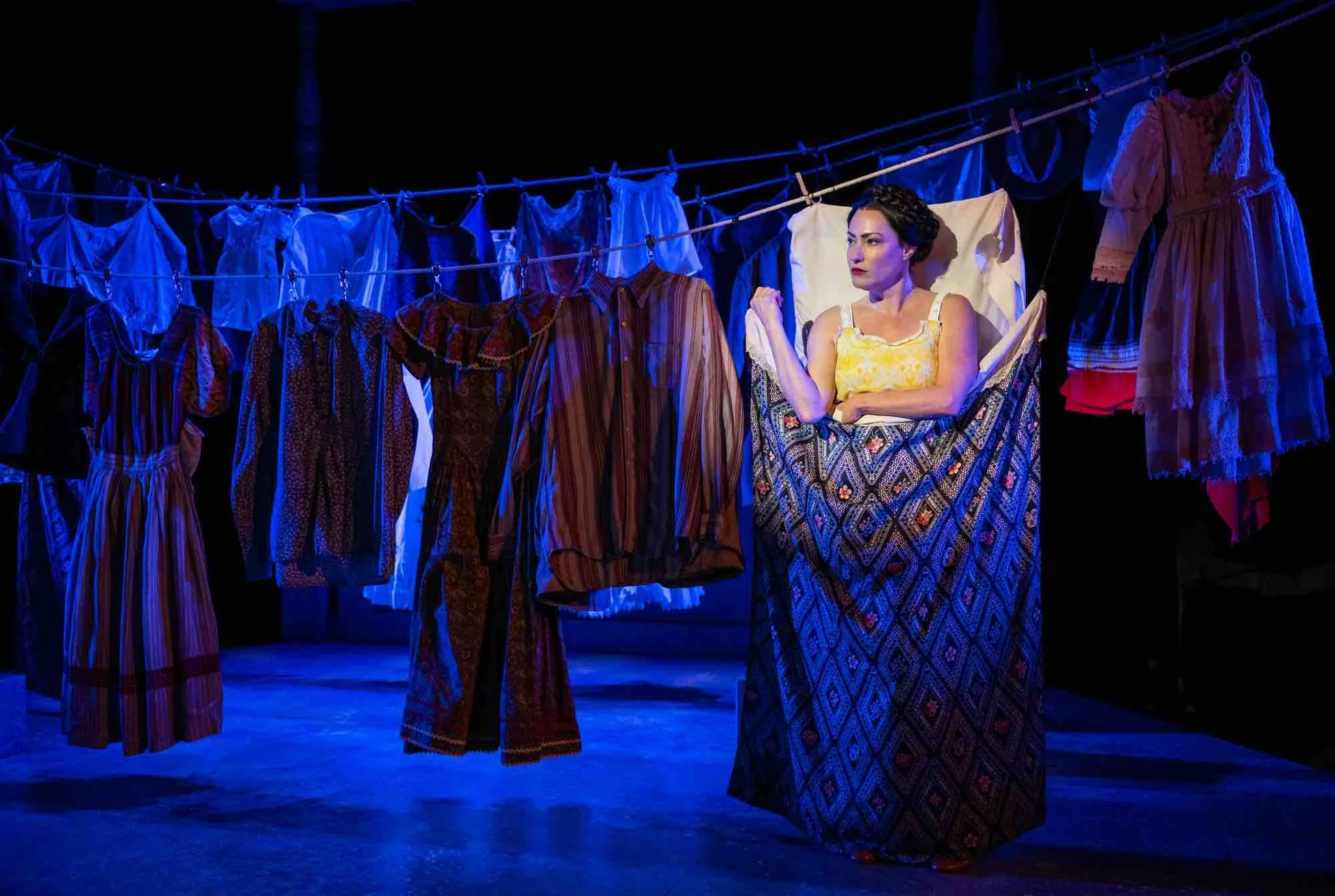
What is left to decide is who this work of art was made for. Was it meant to be an engaging enclave for Frida lovers? Was it a diary of performance art for Servero’s analysis of self-reflection in connection to her in-depth research of Kahlo [that thoroughness was not lost on me]? Was it the annicdonets of archival history that have the reverence of the “If these walls could talk” theory? I say yes, all, some, and none.
It is here we should give ourselves the grace to explore the interdisciplinary practices we call life and heed lived, imagined, and possible outcomes of existence. And maybe in that, each audience member can find a way to create their own self-portrait.
Lexi S. Brunson | Editor-in-Chief /CW


