SnapShot Press Release | FRIDA . . . A SELF PORTRAIT

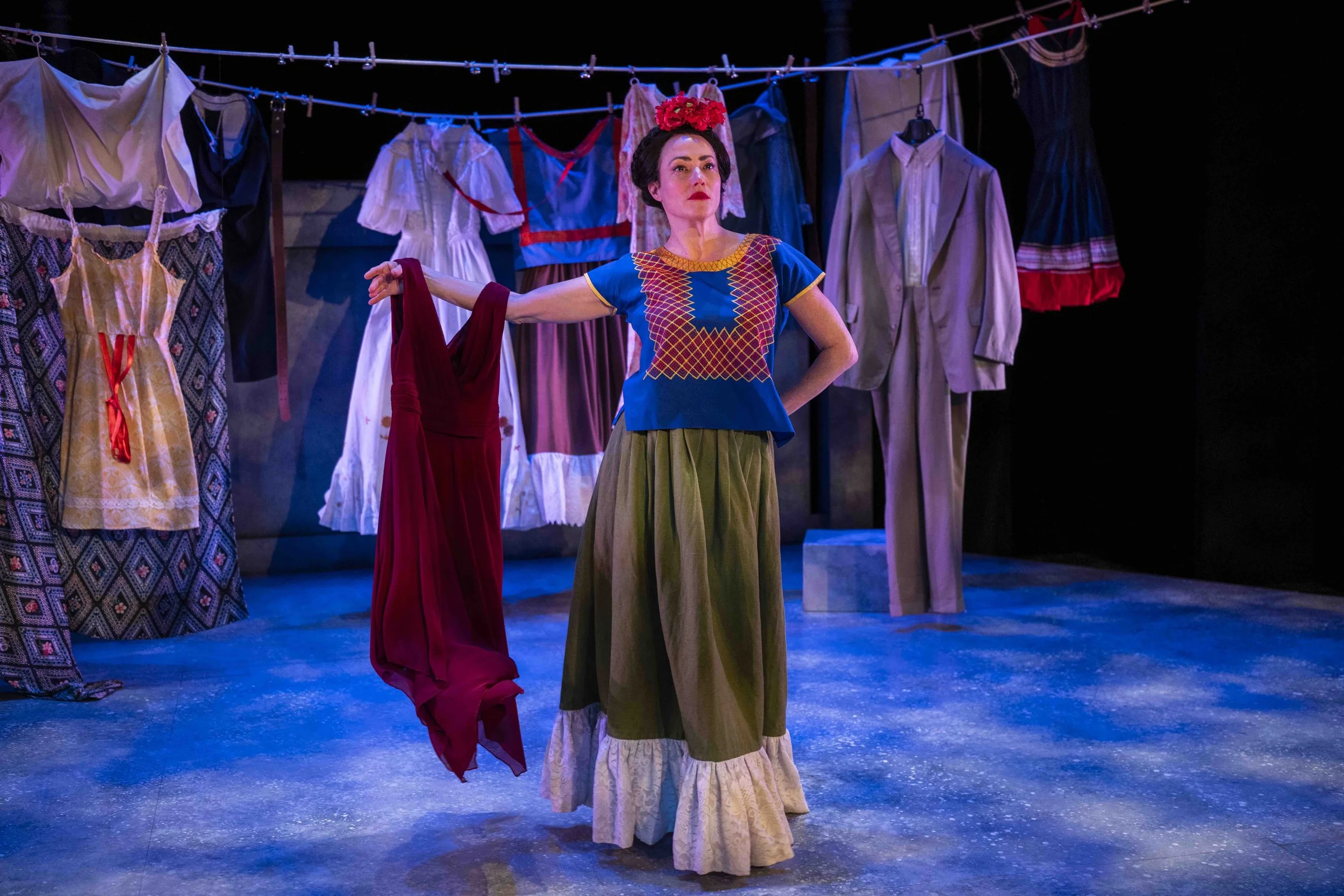
Milwaukee Repertory TheaterpresentsFrida...A Self Portraitin the Herro-Franke Studio TheaterApril 3–May 17, 2026featuring Vanessa Severo.Photo by Michael Brosilow


“Do you see Frida in Me?”

The question has layers. It requires you to see beyond what your eyes can render, it begs you to handle truths that can only be spoken by those who are or have been [whatever it is], and it demands that you have a curiosity that is borderline invasive. To see “Frida” is to know that seeing requires vulnerability, and to lay it on canvas with oil paint is messy work.  

Friday’s [April 10th, 2026] Milwaukee Repertory Theater’s Frida . . . A Self Portrait, written and performed by Vanessa Servero & directed by Joanie Schultz, was a fervently emotional and enchanting interpretation of life as the great  Frida Kahlo. In what could be categorized as a ‘monólogo teatral femenino’, lies the exclamation of mastery in rapid characterization, imaginative set design, and a practice of humility that asks for a confidence that, for lack of a better word, can only be described here as admirable ego.

The life of Frida Kahlo in itself is something of an exquisite corpse. From the polio effect on her body & ability to walk in early life, to the bus accident that sent a pole through her and left her with a broken spine, pelvis, ribs, a pierced abdomen in her late teens, to her stent of being bedridden with over 30 surgeries, the chronic pain, and then wrap it all up with the tumultuous love she had with Diego [I’m not putting his last name because this is not about HIM]. One fragment of her reality is enough to give up on life, but she gifted the world her truth leaving us art that has meaning, that speaks through humanity, that is not void of self.

I believe Vanessa channeled Frida, not just by dressing up like her [I’m not going to lie, I wanted more unibrow] and walking us through her story, but by adding her own truth about her own hurdles in life. Servero did not dismiss her “little hand”; instead, she confronted the difference [as Frida did hers]. She noted how we learn hard truths from the women in our lives. Her mother washing each dish individually, drying them, and then shattering them on the floor as an act of agency and defiance toward her husband [a strength Frida would surely have recognized], and so many other moments of breaking the fourth wall.  
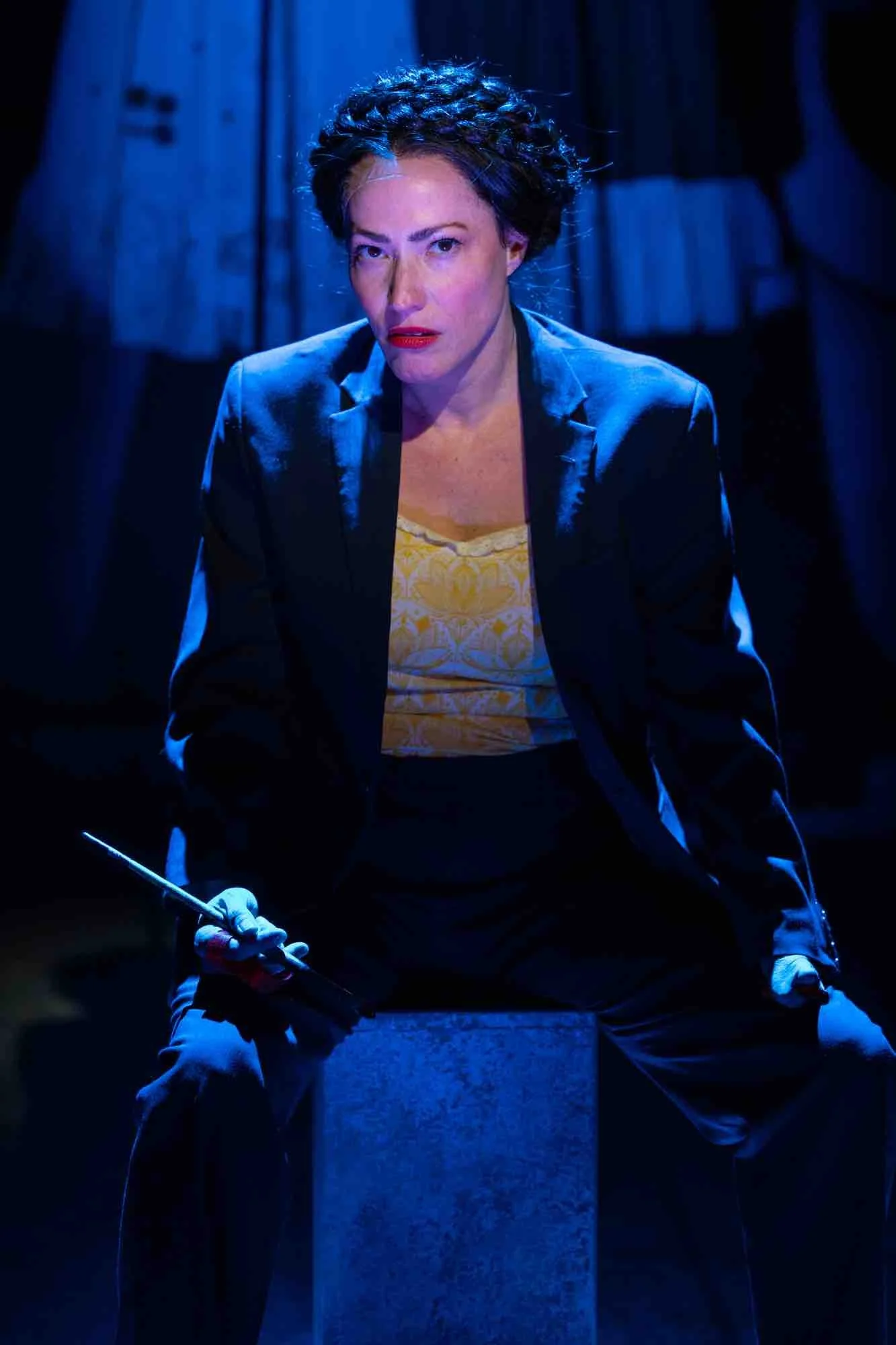
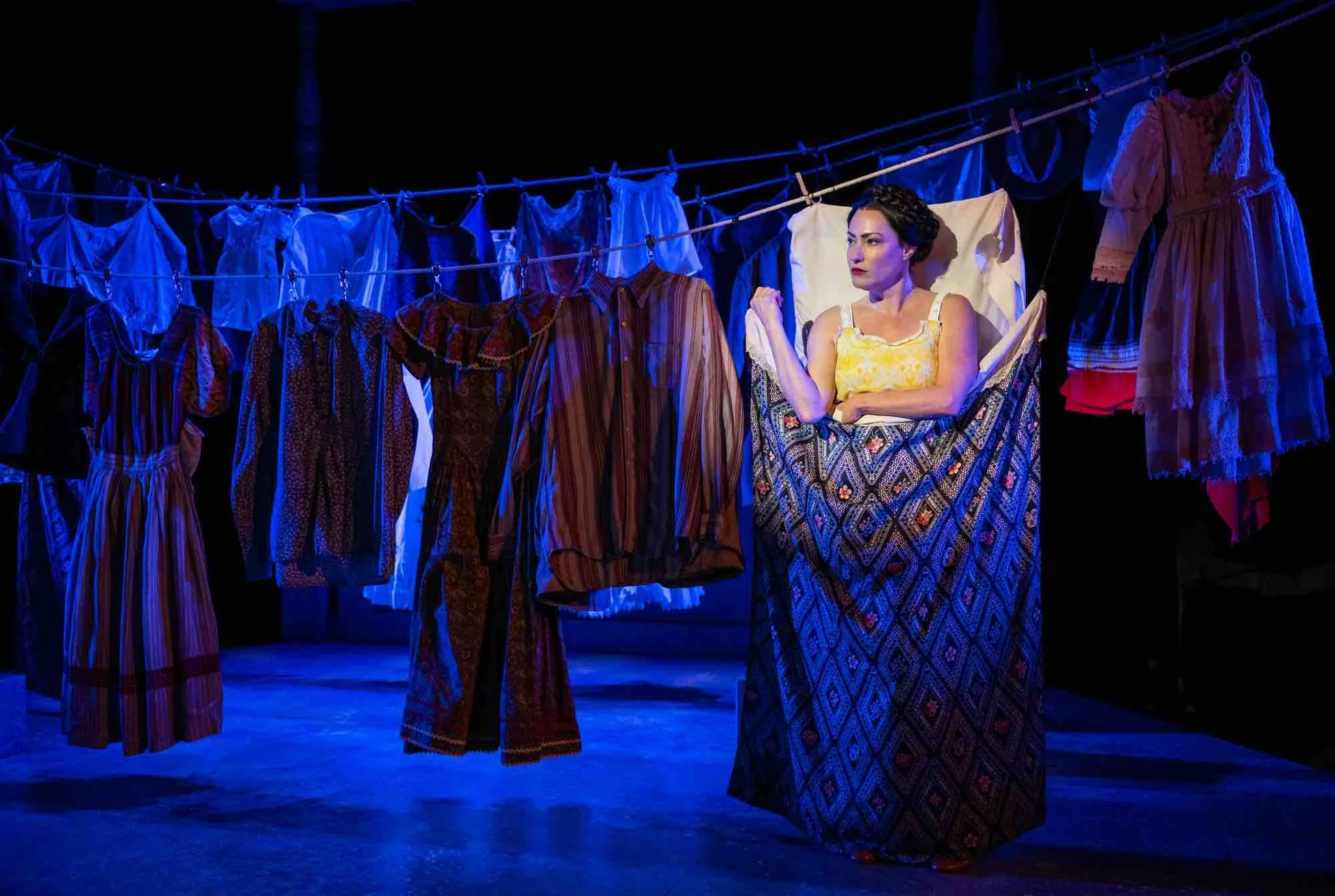
The secrets that this performance unearthed were secrets that require you to know something about something. The surface-level pretentious understanding of surrealism [or magical realism] won't suffice here. It requires you to connect sentiment to the performance, the performance to the stage, the stage to the art, and the art to Frida’s soul. I bowed my head to pray to my ancestors that art school had not forsaken me in this moment, for Servero had referenced so many of Kahol’s master pieces without ever showing one painting. Harnessed between the stage-sized bed post with headboard [Jacqueline Penrods work I presume] and a triptych of clothes lines airing out a life of dirty laundry, you find The Broken Column (1944) [as the series of belts stacked around her waist], Memory, the Heart (1937) [via the traditional Tehuantepec-style garb she barrows from her sister Cristina, who has an affair with Diego], Self Portrait with Cropped Hair (1940) [Frida in masculinity in the black suite], and threads between others depending on how you digest imagery. 

However, it was the earnestness between The Two Fridas (1939) that captured my attention. There were several moments on the stage where Vanessa’s embodiment of Kahlo was bold and proactive [like administering her own morphine syringe, the miscarriages with the baby dresses, or wrapping herself in Diego’s arms, just her and the suit jacket . . . genius!], but the two symbolic ensembles hanging on the clothes lines seemed bigger than life. Linked by the red ribbon [the arteries bleeding], wrapping and unwrapping, it was as if Vanessa was linked to Frida, Frida was linked to Vanessa, and healing was decidedly exposure for all to see. . . and thus still live through it. 

"At the end of the day, we can endure much more than we think we can" - Frida Kahlo

In my own bias, I adore Frida as an icon of human reflection, creativity, and womanhood that is not compartmentalized by traditional lenses. I see her life as beautiful and something to learn from [which is why my daughter's middle name holds Kahlo as its namesake] & why I agreed to see this performance. 
What is left to decide is who this work of art was made for. Was it meant to be an engaging enclave for Frida lovers? Was it a diary of performance art for Servero’s analysis of self-reflection in connection to her in-depth research of Kahlo [that thoroughness was not lost on me]? Was it the annicdonets of archival history that have the reverence of the “If these walls could talk” theory? I say yes, all, some, and none. 

It is here we should give ourselves the grace to explore the interdisciplinary practices we call life and heed lived, imagined, and possible outcomes of existence. And maybe in that, each audience member can find a way to create their own self-portrait. 

Lexi S. Brunson  | Editor-in-Chief /CW


Marie & Rosetta - Snap Shot Press Release [The Godmother of Rock ‘n’ Roll & The Wind Beneath Her Wings]

It is no secret that every last one of us comes from different walks of life. No matter what trials and tribulations come our way or what groundbreaking dreams instill that grit and exhilaration inside our souls.

Millions of people find it quite easy to relate [and associate] with only those who give them the feeling that they are glancing into a mirror. The cost of this is usually shying away and subconsciously avoiding others who may seem “a little too much” or that orbit on the other end of the spectrum. Humanity has taken a prolonged journey to comprehend that opposites attract. [In the words of Sam Cooke, “It’s been a long time coming”]. 

As a result, new conversations, innovations, and walks of life are born. 

Friday’s (October 25th, 2024) showing of Marie & Rosetta at the Milwaukee Repertory Theatre was a vulnerable and intimate depiction of this revelation. Beyond the physical attributes of these characters, lived “culture” creates a divergence in how they differ in society. So you may be asking, “Now girl how are these two black women completely different from one another?”. Well, honey find a cozy seat while you’re on the clock because the words complex and the phrase, ahead-of-its-time, are just the beginning. This may take a minute.

Did you know that the gorgeous and bold men behind the origin of Rock ‘n’ Roll such as Little Richard, Elvis Presley, and Jimi Hendrix were influenced, captivated, and mesmerized by Sister Rosetta Tharpe before they even started paving the way for the rest of the world themselves? A Black woman born in Arkansas that traveled with her mother to Chicago at age 6 performing as a duo. Her mother Katie would preach into the Chi streets with chilling sermons as Rosetta would close out singing light gospel music. She spoke her mind as if she was Wendy Williams taping Hot Topics, and had no fear of what others thought or would judge her for. Her wardrobe of sequins, furs, and enchanting dresses were just as eye-catching and jaw-dropping as her performances. I almost jumped out of my seat as her hit song, Rock Me, was performed by Bethany Thomas who plays Tharpe, with a commanding aura of musical majesty.

As the curtains open, the confident superstar has just successfully chosen her new protegee who will accompany her on tour. Marie, played by Alexis Roston, presents herself as a young talent who is very innocent, angelic, and on the straight-narrow. Marie is no free spirit [and soon we discover she is not “free” at all]. Through Tharpe’s proding for information about her new talent find, she discovers that Marie is actually a 23-year-old married woman and mother of two who sang in a quartet and constantly thought about how the church viewed her and what others thought of her. Marie never wanted to be the woman the church folk would oohh and ahh about.  She would’ve been almost as innocent as Jesus’ mother Mary, but she was caught in that lie within the first few minutes of the production. Not only did Marie downplay her age, but she had a hidden edge to her. She would sneak around the church playing secular music [a scandal of those times] and was a preacher's wife [a preacher she was not too happy with]. This is where the topic of opposites attracting comes full circle. 

Rosetta did reveal that Marie’s lies were the reason why she initially chose her to come on tour; as she seemed to contrast Rosetta’s image. Rosetta wanted to re-enter the church circuit as a performer, but her headlining juke joints and supper clubs took her right off of that saintly roster.

This performance becomes alluring when the ladies begin to create a healing yet difficult dialogue amongst one another as the story shares their first night creating their electrifying tour.

Set in a funeral home showroom in the South, this heartwarming yet harsh reality check creates an emotional exchange between the two women. Tharpe begins describing to her wide-eyed protegee that showbiz for Black women during that time was no red carpet walk at the BET Awards [Today’s acts like Latto, Glorilla, and Megan Thee Stallion, with their controversial aesthetics may still feel this way]. Rosetta revealed that music was the only thing that loved her back after she lost her mother. The inventory of husbands, money, and fur coats did not make her heart skip a beat or give her a sense of genuine love. As the night continues, Marie wears her heart on her sleeve and starts revealing her most honest thoughts to Rosetta. This form of intimacy seemed new for Marie. She eventually admitted wanting to leave her husband since he didn’t value her anymore and how she felt she lost herself in the marriage [Divorce? Baby, not in the churchhhhhhhh!]. 

Controversy is one thing playwright, George Brant, and director E. Faye Butler did not run away from. The topics of divorce, mistreatment of African-American performers in the music industry, and even a hint of homosexuality, regarding a romantic relationship between the two leading ladies were showcased in such an intriguing, yet transparent angle. This lens harnesses the delicacy of truths that are usually avoided in “historical” reenactments. These complexities are exactly what we need to see on the stage, so that we may feel their gravitas in society. The production balanced out with comedic relief, harsh truths, and soul-touching musical numbers. In my opinion, the music and Rosetta’s direct personality united the two into the dynamic duo they became. Once they got over the hurdle of Marie subconsciously judging and trying to change what many used to call “secular ways” Rosetta had and accepted each other for who they were in that moment; magic sparked! 

There’s no question that both ladies demanded my attention from the opening act to the closing scene but with much reflection; I found myself in Marie. I connected with how others perceived her. Just as Marie seems innocent and knows nothing of the world to other people; at times I believe that’s how people see me. Once Rosetta began listening to her thoughts, dreams, and experiences, Marie was then displayed as a strong, talented, and daring young woman who just wanted people around her to take her more seriously. However; Marie also trapped herself in the role of a people-pleaser and rule-follower. The majority of her life, just like I, carried times of doing things the “right” way and bending herself in so many different directions to make everyone else’s dreams for her life come to fruition instead of living the life Marie wanted for herself. 

Who knew with the right push from her favorite musician that blossomed into a close relationship [nobody ever knew the full details of], that Marie would become a walking memorial for Rosetta after Tharpe passed? Marie started having a free-spirited attitude, speaking her mind without second-guessing herself, and stood on her own name. Not hiding behind a husband, her mentor, her parents, or society’s rules anymore. Many of us, including myself can look into the mirror and see flashes of Marie. Whether it’s her spirit that has others thinking she’s younger, her gentle tone that makes others think she’s holding back something and doesn’t have a voice of her own, or her ability to camouflage herself into the background of any environment and observe that confuses others into thinking her entire being is invisible. For some, it only takes a few months while others need years to find themselves and understand their purpose, but honey a journey is a journey!

Do you think you need a little push into some reflection of your own? Do you want an entertaining history lesson that’ll take you back to the time when two black women owned Rock ‘n’ Roll? Maybe you would like to jam out to some soulful, yet bold music? I want to extend the invite /CW received from the Milwaukee Rep to you. Go check out Marie & Rosetta between now and Dec 15th. This show will give you the laughs, moments of silence, and strength you need to take a deep look into who you are and how everyone and everything else around you affects the trajectory of your lifestyle and where you are headed, family. 

Desriana Gilbert | Entertainment & Social Journalist for /CW

Taiyamo Denku & Urban Legend - Not From New York prod by Bo Faat video by CTMFILMs

Hip Hop is now global and so is the impact from its places of origin. Including NYC. around here we have our own method of doing things but one must be in tune with other spaces to survive the ride.

This video from Taiyamo Denku & Urban Legend, “Not From New York”, plays up on that logic. Classic hip hop flows, production and street vibes. 

Your welcome!

/CW

Voice the Vote Voting Videos: Pyro - “We Out Here” (Presented by Milwaukee Rep and Wisconsin Conservation Voices)

As Voting is under way, we want to make sure our community is listening, understanding what is at stake and why their vote matters. So for the next few weeks we will be sharing videos featuring local artist who have a creative take on the subject.

Wisconsin Conservation Voices, the Milwaukee Repertory Theater have partnered to produce four music videos featuring local up-and-coming Milwaukee artists, with financial support from Northwestern Mutual. The artist’s messages are clear: “Make Change” and “Show Up.” The goal was to give these artists the opportunity to express themselves in the medium that speaks to them: music.

Check out this track “We Out Here” by Pyro and hit us w/ a comment on why you have or will “Make Change” and “Show Up”.

/CW


Voice the Vote Voting Videos: Bisca Rae - “Show Up” (Presented by Milwaukee Rep and Wisconsin Conservation Voices)

As Voting is under way, we want to make sure our community is listening, understanding what is at stake and why their vote matters. So for the next few weeks we will be sharing videos featuring local artist who have a creative take on the subject.

Wisconsin Conservation Voices, the Milwaukee Repertory Theater have partnered to produce four music videos featuring local up-and-coming Milwaukee artists, with financial support from Northwestern Mutual. The artist’s messages are clear: “Make Change” and “Show Up.” The goal was to give these artists the opportunity to express themselves in the medium that speaks to them: music.

Check out this track “Show Up” by Bisca Rae and hit us w/ a comment on why you have or will “Make Change” and “Show Up”.

/CW


Voice the Vote Voting Videos: Baby Mont - “Make Change” (Presented by Milwaukee Rep and Wisconsin Conservation Voices)

As Voting is under way, we want to make sure our community is listening, understanding what is at stake and why their vote matters. So for the next few weeks we will be sharing videos featuring local artist who have a creative take on the subject.

Wisconsin Conservation Voices, the Milwaukee Repertory Theater have partnered to produce four music videos featuring local up-and-coming Milwaukee artists, with financial support from Northwestern Mutual. The artist’s messages are clear: “Make Change” and “Show Up.” The goal was to give these artists the opportunity to express themselves in the medium that speaks to them: music.

Check out first track “Make Change” by Baby Mont and hit us w/ a comment on why you have or will “Make Change” and “Show Up”.

/CW


Voice the Vote Voting Videos: Mudy - “Change Comes Slow” (Presented by Milwaukee Rep and Wisconsin Conservation Voices)

As Voting is under way, we want to make sure our community is listening, understanding what is at stake and why their vote matters. So for the next few weeks we will be sharing videos featuring local artist who have a creative take on the subject.

Wisconsin Conservation Voices, the Milwaukee Repertory Theater have partnered to produce four music videos featuring local up-and-coming Milwaukee artists, with financial support from Northwestern Mutual. The artist’s messages are clear: “Make Change” and “Show Up.” The goal was to give these artists the opportunity to express themselves in the medium that speaks to them: music.

Check out this first track “ “Change Comes Slow” by Mudy and hit us w/ a comment on why you have or will “Make Change” and “Show Up”.

/CW