

SnapShot Press Release | I AM MY OWN WIFE
/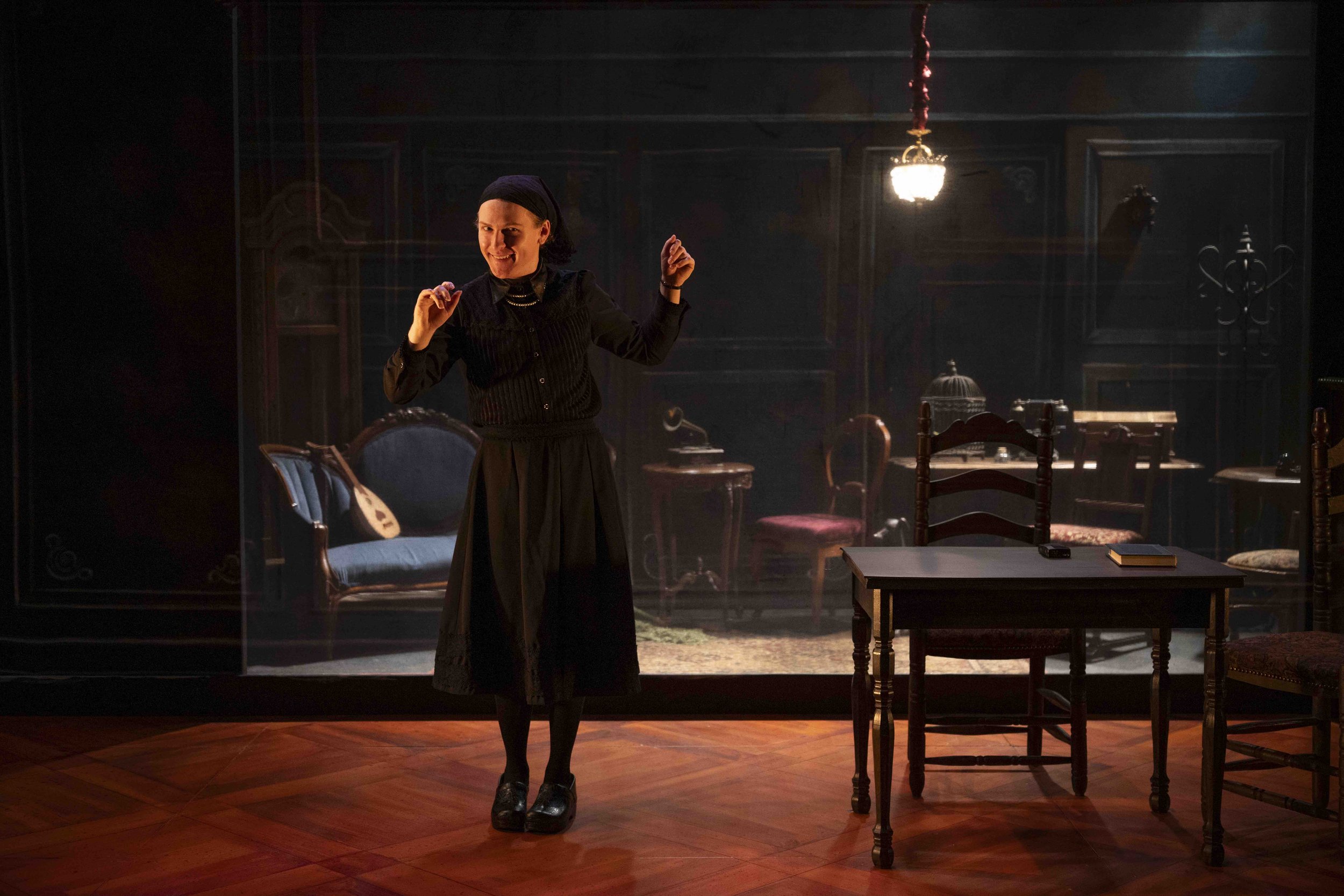
ALL PHOTOS BY MICHAEL BROSILOW
“It is a record of living...of lives”.
I may have heard it wrong, but the sentiment still remains the same. The record, the story, the archive, etc is what lives on as a note of existence. It becomes the validation of history and the note of truth. But who dictates what remains intact and what is meant to be forgotten? As a trained/degreed Ethographic Researcher & Lived Archivist [shameless plug], I have spent a hefty part of my adult life listening to people tell their stories from their perspectives. In contrast, this work has also led me into countless hours of discovery in reading rooms, where boxes of documents, images, and other tangible assets hold the “burden of truth”. From this, I have noted several discrepancies, in which the privileged [of power, money, social hierarchy] are the victors of the narrative [& usually the war . . . any & every war]. Yet, there are more truths, more perspectives, and more realities that should be added to the canon of existence. And the lens of Charlotte von Mahlsdorf is one of them.
Sunday’s [January 25th, 2026] Milwaukee Chamber Theater’s performance of I Am My Own Wife challenged the record of validation with Jonathan Riker’s performance, taking us through memory, transcript, audio recording, historical narrative, and analysis all at once. Jonathan is Charlotte von Mahlsdorf, as they are John Marks [the American Journalist], Tante Luise [Charlotte’s aunt], a Stasi Agent, Alfred Kirschner [Charlotte’s friend & possible love], Karl Henning, Pradeep Gupta, and the list goes on and on. The play asks us to imagine how a trans woman [Charlotte] could survive Nazi Germany. The terror of inhuman practices of the time, mixed with the social scrutiny of anything outside of cultural dictatorship [sound familiar?], it seems inconceivable. And yet, Charlotte lived.
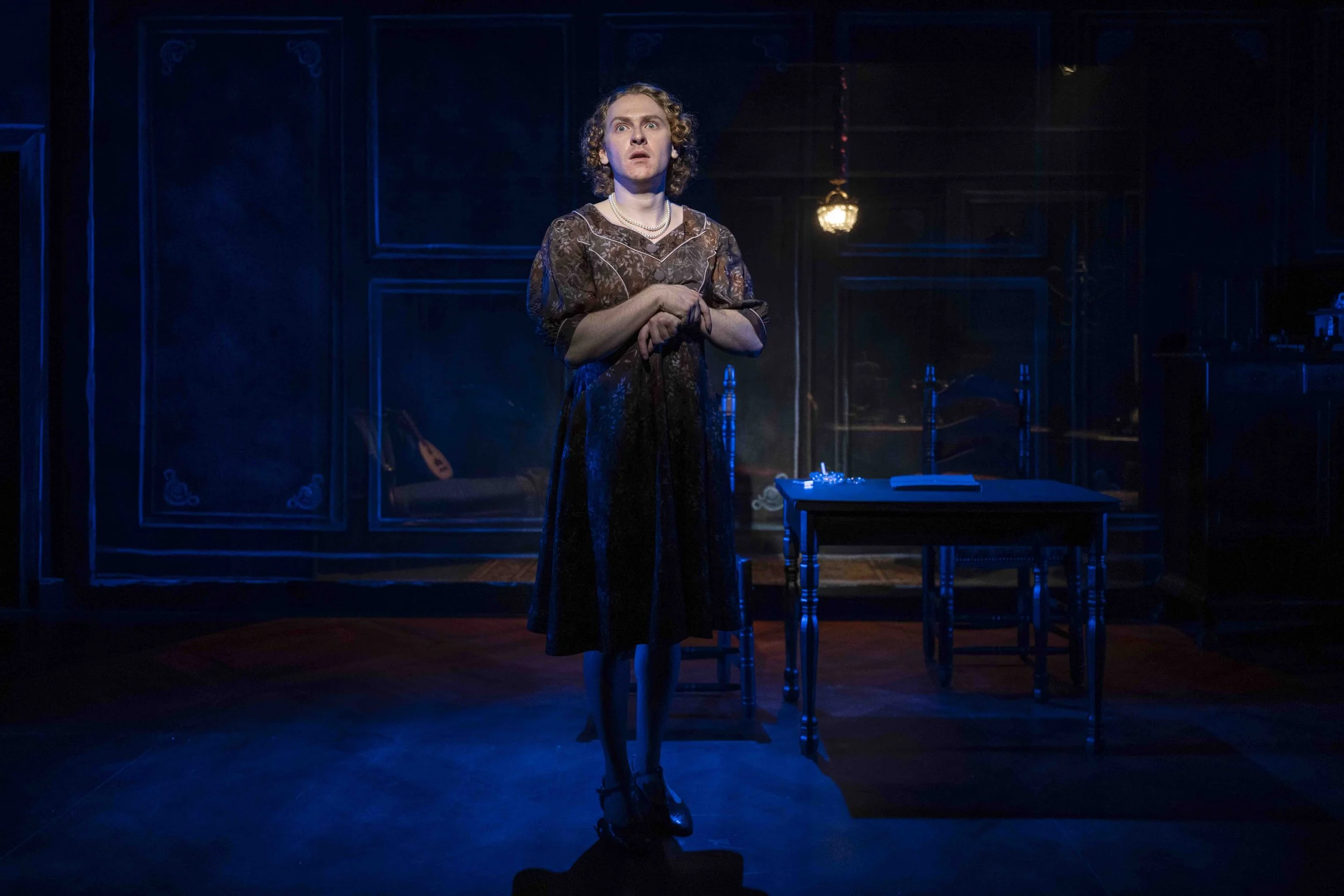
There is no surprise here why playwright Doug Wright received a Pulitzer Prize for Drama [2004] for this work of art. As Alexander Coddington thoughtfully directed this one-person performance, you discover the intimacy of interpretation and the subtlety of existing on the periphery of a society that mocks anything authentic. It is in the slight repositioning of the furniture [Charlotte and her furniture], the caressing of small artifacts [to hold a bit of history in the palm of your hand], and the secret bar in the basement [on stage, a glass wall, a preserved scene just like in any museum]. However, it is the undressing on stage to the satin [or was it silk?] slip that did it for me. The vulnerability that is Charlotte, that is Jonathan, that is the body, that becomes a question of access, of denial, of performance, of practice, of potrail. . . we watched. We watched as she/they/them [all of them] stripped themselves of the ensembles that are often used to define roles, gender, and status in society. A patterned dress, a modest black skirt with a matching blouse and headscarf, a bold red coat, and the prisoner's sweater. And then again, we watched as they dressed themselves. In this garb, to be seen as this being, as if what we saw underneath had changed [Had it changed?].
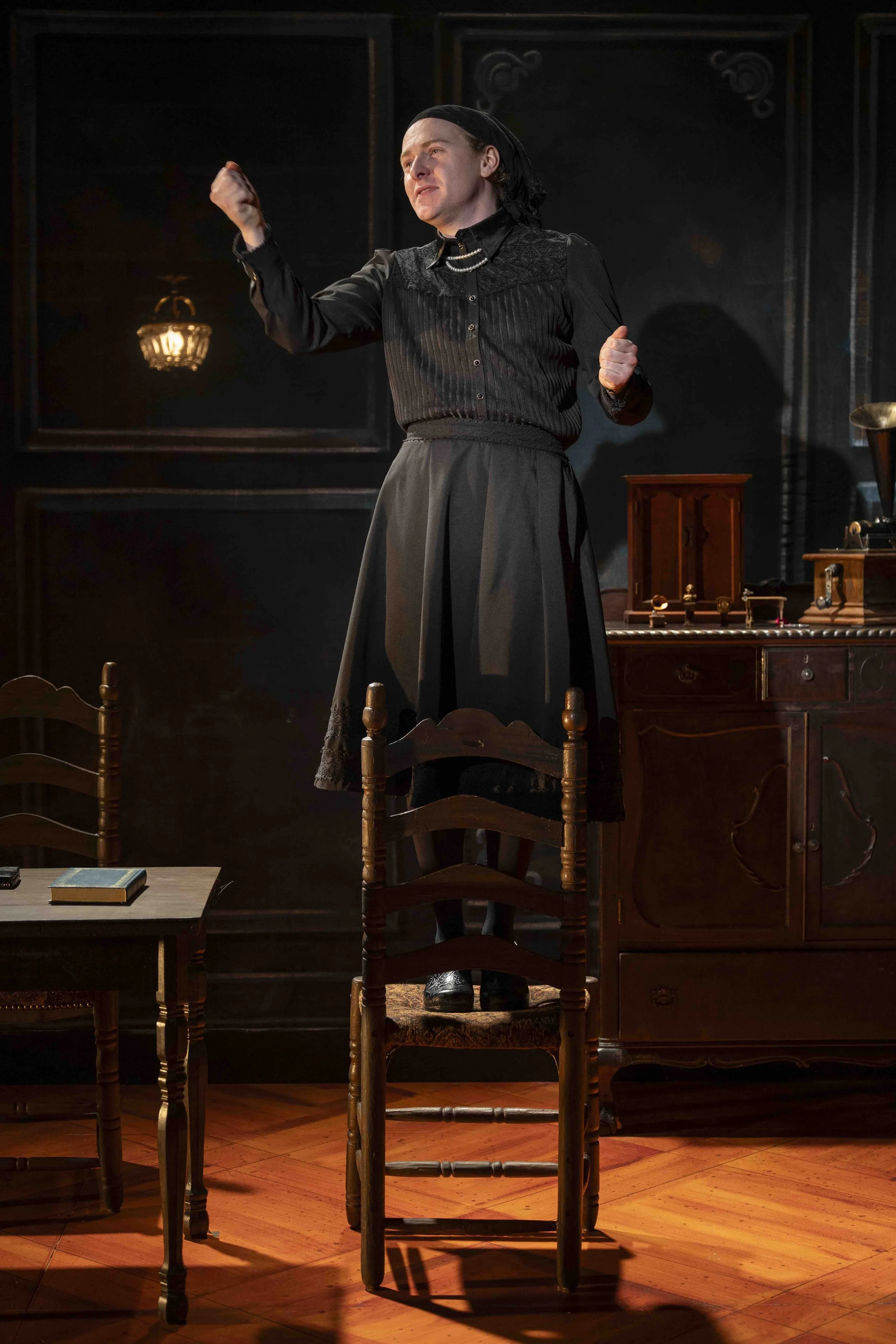
As Riker shows us range with thick German accents, more than one American dialect, a full spectrum of femininity and masculinity, you believe that they are all these people. You believe that Tante Luise sees the young Charlotte's need for queer affirmation as he notes his own position as a trans man. You believe John Mark's anxiety as a journalist when Charlotte’s Stassi file contradicts her anecdotal recollection from her interviews. You believe that Charlotte fears her abusive father with his threat to kill her mother & siblings. You believe that this lens, this truth, this archive, is as rich as all the ones that have dominated our way of seeing for far too long, and here any embellishment, any uncertainty, any fantastical note, is just as plausible as the policy propaganda the powers that be say is “truth” [new regime, same fugazi].
There is more to say, but I think anyone who walks into the lion's den and lives to tell about it deserves to share their side of the story.
If you believe in humanity, if you believe in inclusivity, if you believe in thought-provoking theater, and if you believe in art that resonates and informs its audience with threads of contemporary [& historical] rhetoric that values more than the status quo, grab your ticket to see I Am My Own Wife.
[& well if you don’t believe in those things, I will say it on the record . . . F*ck you!]
Lexi S. Brunson | Editor-in-Chief /CW


